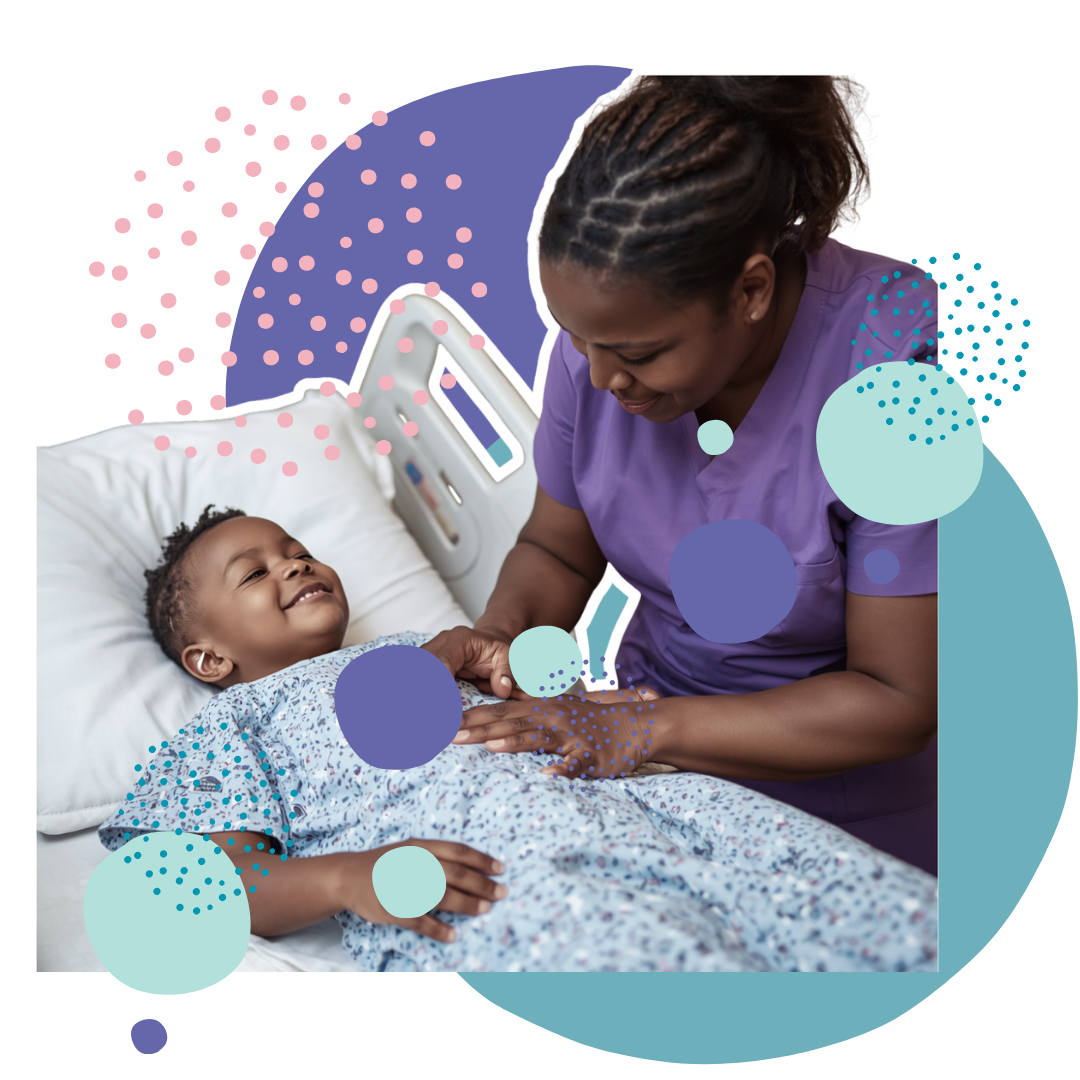
After more than twenty-five years working in hospitals around the world, I have learned something important:
Good intentions are not enough.
Compassion matters.
Clinical skills matter.
A desire to help matters.
But healthcare environments require something more.
They require specialized knowledge, professional confidence, and the ability to navigate some of the most complex and emotionally charged situations a healthcare professional will ever encounter.
Over the years, I have met countless professionals who were drawn to the idea of bringing comfort, connection, and evidence-informed touch therapy into healthcare settings.
Some were massage therapists hoping to work within hospitals.
Some were nurses, physicians, child life specialists, or integrative care providers looking for additional tools to support patients and families.
Others were healthcare leaders searching for ways to enhance patient experience, family-centered care, and quality of life.
Despite their different backgrounds, they all shared a common goal:
To improve the healthcare experience for the people they serve.
Yet many quickly discovered that healthcare environments are very different from traditional clinical or private practice settings.
The expectations are different.
The language is different.
The documentation is different.
The patient populations are different.
The risks are different.
The emotional demands are different.
Most importantly, the responsibility is different.
Healthcare professionals are entrusted with caring for individuals during some of the most vulnerable moments of their lives.
That trust must be earned.
And earning that trust requires education, preparation, and a deep understanding of healthcare culture.
Throughout my career, I have watched the role of massage therapy evolve within hospitals and medical settings. Today, many healthcare organizations recognize the value of integrative care, family-centered care, and evidence-informed supportive therapies.
Yet one challenge remains.
There are still far too few professionals who are truly prepared to integrate massage and touch therapy into healthcare environments.
Not because they lack talent.
Not because they lack compassion.
But because they were never taught how.
Hospital-based massage therapy is not simply massage performed inside a hospital.
It is a specialized practice requiring an understanding of medical conditions, interdisciplinary communication, infection prevention, contraindications, documentation, professional boundaries, ethics, and the unique needs of medically complex patients and families.
When these skills are combined with compassion and clinical excellence, something remarkable happens.
Professionals become stronger contributors to the healthcare team.
They learn how to collaborate more effectively across disciplines.
They develop a deeper understanding of patient needs.
They gain the confidence to advocate for integrative care approaches that support both physical and emotional well-being.
And they become trusted by physicians, nurses, child life specialists, social workers, rehabilitation professionals, administrators, patients, and families.
That trust opens doors.
Not only within hospitals.
But throughout the broader healthcare community.
Hospital-based education is valuable far beyond the walls of a hospital.
Massage therapists gain the knowledge and confidence needed to safely support medically complex populations and communicate effectively with healthcare teams.
Healthcare professionals gain practical skills that can help improve comfort, reduce stress, strengthen therapeutic relationships, and support patient- and family-centered care.
Administrators and program leaders gain a deeper understanding of how massage and touch therapy services can be integrated safely, ethically, and effectively into healthcare environments.
Regardless of professional background, understanding how touch therapy functions within healthcare settings creates opportunities to provide more comprehensive and compassionate care.
Healthcare providers are increasingly seeking professionals who understand medical complexity.
Parents are looking for practitioners who can safely support children with diagnoses, disabilities, developmental differences, and healthcare challenges.
Families want confidence that the professional they choose understands more than techniques.
They want someone who understands the realities of healthcare.
They want someone they can trust.
Over the years, I have witnessed moments that continually remind me why this work matters.
I remember a young oncology patient who looked at me after a session and quietly said, “Everyone comes into my room to do something to me. You came in just to help me feel better.”
Those words have stayed with me for years.
I remember a mother sitting beside her infant in a neonatal intensive care unit. Tears filled her eyes as she shared, “For the first time since we got here, I feel like I’m helping my baby instead of just watching.”
And I remember a teenager recovering from a significant medical procedure who told me, “When you were here, I almost forgot I was in the hospital.”
These moments are not about massage alone.
They are about humanity.
They are about connection.
They are about restoring comfort, dignity, and emotional support in environments that can often feel overwhelming.
Hospital-based massage therapy is not simply a career path.
It is a commitment to serving individuals and families when they need support most.
It is a commitment to collaboration.
It is a commitment to lifelong learning.
And it is a commitment to providing safe, ethical, evidence-informed care within complex healthcare environments.
Whether your goal is to work directly in a hospital, integrate massage and touch therapy into an existing healthcare role, expand services within your organization, or elevate your private practice through a deeper understanding of healthcare-based care, specialized training matters.
If you feel called to serve children and families within healthcare settings, or you’re looking to elevate your clinical knowledge and confidence, I invite you to download our complimentary ebook about Hospital-Based Pediatric Massage Therapy.
It offers an inside look at the upcoming Hospital-Based Massage Therapy Certification Program in Baltimore, Maryland, including the philosophy behind the program, the unique learning experiences participants can expect, and why this rare educational opportunity has become one of the most respected hospital-based massage therapy trainings available today. After more than five years since it was last offered, and with no program currently planned for 2027, this is an exceptional opportunity to learn directly from my decades of experience developing hospital-based massage therapy programs around the world.
Hospital-based massage therapy has the power to change lives.
But it begins with preparation.
Because when compassion is supported by knowledge, confidence, and clinical excellence, extraordinary things become possible.
Interested in Learning More?
Download our complimentary ebook:
Hospital-Based Massage Therapy: Changing Lives Through Healthcare Integration
And discover how healthcare professionals around the world are bringing comfort, connection, and evidence-informed touch therapy into hospitals, healthcare organizations, and community settings.
Explore the Hospital-Based Massage Therapy Certification Program
Baltimore, Maryland | September 2026
Join us for a rare opportunity to learn directly from Tina Allen and gain the specialized knowledge, practical skills, and healthcare insights needed to successfully integrate massage and touch therapy into complex healthcare environments.