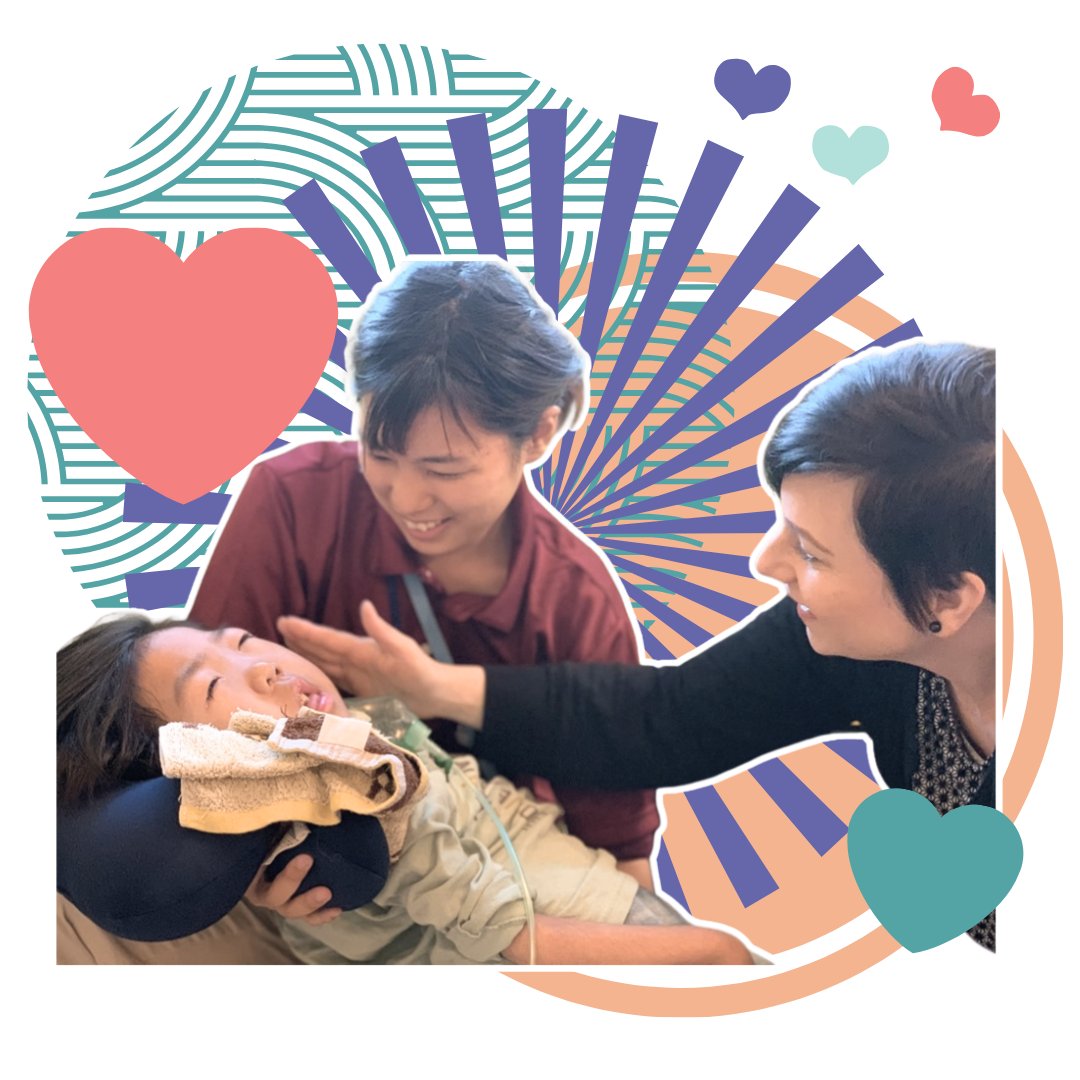
When I tell people that I’m a massage therapist who works in a children’s hospital, the reaction is almost always the same. A pause, a tilted head, and then the question: Why would a hospital need a massage therapist for kids?
I understand the confusion. Most people picture massage therapy as a luxury, something you book at a spa after a stressful week, not something that belongs alongside IVs and monitors in a pediatric unit. But after more than two decades of working bedside with some of the sickest children in the world, I can tell you that what I do isn’t a luxury here. It’s medicine.
The Problem We’re Solving
Children who are hospitalized for serious or chronic illness live in a state of near-constant sensory assault. Alarms beep through the night. Needles arrive without warning. Strangers in gloves touch them dozens of times a day, almost always to do something that hurts or feels uncomfortable. Over time, something shifts in these kids. Their nervous systems get stuck in fight-or-flight mode. Their muscles tighten around surgical sites. They flinch when anyone reaches toward them. Some stop wanting to be touched at all, even by their parents.
This is the problem we address. Not relaxation. Not pampering. I’m working to help a child’s body remember that touch can be safe, gentle, and healing.
What Pediatric Massage Actually Looks Like
Pediatric massage therapy in a hospital setting looks nothing like what most people imagine. There are no dim rooms, no essential oil diffusers, no hour-long sessions on a cushioned table. My work happens in hospital beds, in recliners where parents hold their children, sometimes in pre-op hallways minutes before a child is wheeled into surgery.
A session might last five minutes or forty-five, depending on what the child can tolerate. With a newborn in the NICU, it might be nothing more than a still, warm hand resting on a tiny back, no gliding, no pressure, just presence. With a teenager recovering from spinal surgery, it might be careful, targeted work on the muscles that have seized up around the incision. With a toddler who screams every time a nurse enters the room, it might be a slow, playful routine where I let them “massage” a stuffed animal first, so they can feel in control before anyone touches them.
Every session is different because every child is different. But the through line is always the same: I am trying to help this child’s body feel like it belongs to them again.
The Science Behind the Touch
The clinical case for pediatric massage therapy is strong and growing. Research consistently shows that massage reduces cortisol, the body’s primary stress hormone, while increasing serotonin and dopamine, the neurochemicals associated with calm and well-being. In pediatric populations specifically, studies have demonstrated measurable reductions in pain, anxiety, and nausea, along with improvements in sleep and immune function.
But the data that matters most to the doctors and nurses I work alongside tends to be more immediate and practical. A child who receives massage before a procedure often needs less sedation. A post-surgical patient whose muscles are manually loosened around the surgical site frequently progresses faster in physical therapy. A child with cancer who is too nauseated to eat sometimes finds that fifteen minutes of gentle abdominal and foot massage is enough to let them keep a meal down. These aren’t abstract outcomes. They shorten hospital stays. They reduce medication loads. They move the needle on recovery in ways that show up in the chart.
Caring for the Whole Family
One of the things people don’t realize about pediatric hospitals is that you’re never treating just the child. You’re treating a family in crisis. Parents who have uprooted their lives, who are sleeping in chairs, who are holding themselves together through sheer willpower while their child endures things no parent should have to witness.
Part of my role is caring for them, too. I teach parents simple massage techniques they can use with their child, not because I’m trying to make them into therapists, but because so much of their power has been taken away. They can’t fix the diagnosis. They can’t take the pain. But they can place their hands on their child’s feet at the end of a brutal day and offer something that no machine or medication can replicate: the specific, irreplaceable comfort of a parent’s touch.
I’ve watched fathers who haven’t cried in weeks break down the first time they massage their baby’s hands in the NICU. I’ve seen mothers whose children have been in isolation for months say that learning infant massage was the first time they felt like a mom again instead of a bystander. These moments don’t appear in clinical outcome data, but they are as real and as important as anything we measure.
Bridging the Gap Between Clinical and Human
Hospitals are extraordinary at keeping children alive. The technology, the expertise, the relentless precision of modern pediatric medicine, it’s remarkable. But there is a gap between keeping a body alive and helping a child feel whole. That gap is where I work.
I am the person on the care team whose entire job is to make the hospital feel less like a hospital. To give a child fifteen minutes in their day where nothing is being measured, nothing is being evaluated, and nothing hurts. To remind their nervous system that the world still contains gentle things. To help a small body that has been poked and prodded and scanned and sutured remember what safe, kind, human contact feels like.
That is why a hospital needs a pediatric massage therapist. Not because it’s nice. Because it’s necessary. Because we are not just treating conditions, we are caring for children. And children, above all else, need to be touched with kindness.